
Funding Areas
Grants Programs
The Foundation
Grants Portals


The James F. and Marion L. Miller Foundation believes that the arts connect us to each other in powerful and surprising ways and help us make sense of our world. By celebrating the vital role artists play in enriching the lives of all Oregonians, we recognize that artists are essential to our state’s vitality.
The Foundation has funded the arts throughout Oregon for over two decades, primarily by supporting the work of arts organizations. In 2024 we launched the Spark Award for Oregon Artists, a three-year pilot program that provides direct support to 60 midcareer individual artists across artistic disciplines.
.jpg)
Photo credit: Darien Attridge
Guidelines for the 2026 Spark Award for Oregon Visual Artists are now available [PDF].
The Application period will open on April 15. Applications are due on June 3, 2026 by 5pm PDT.
Sign up for updates here.
The Miller Foundation will grant $25,000 to each selected artist. Recipients can receive the award in a single payment shortly after award announcements or in multiple installments. Awardees will receive a 1099-MISC form.
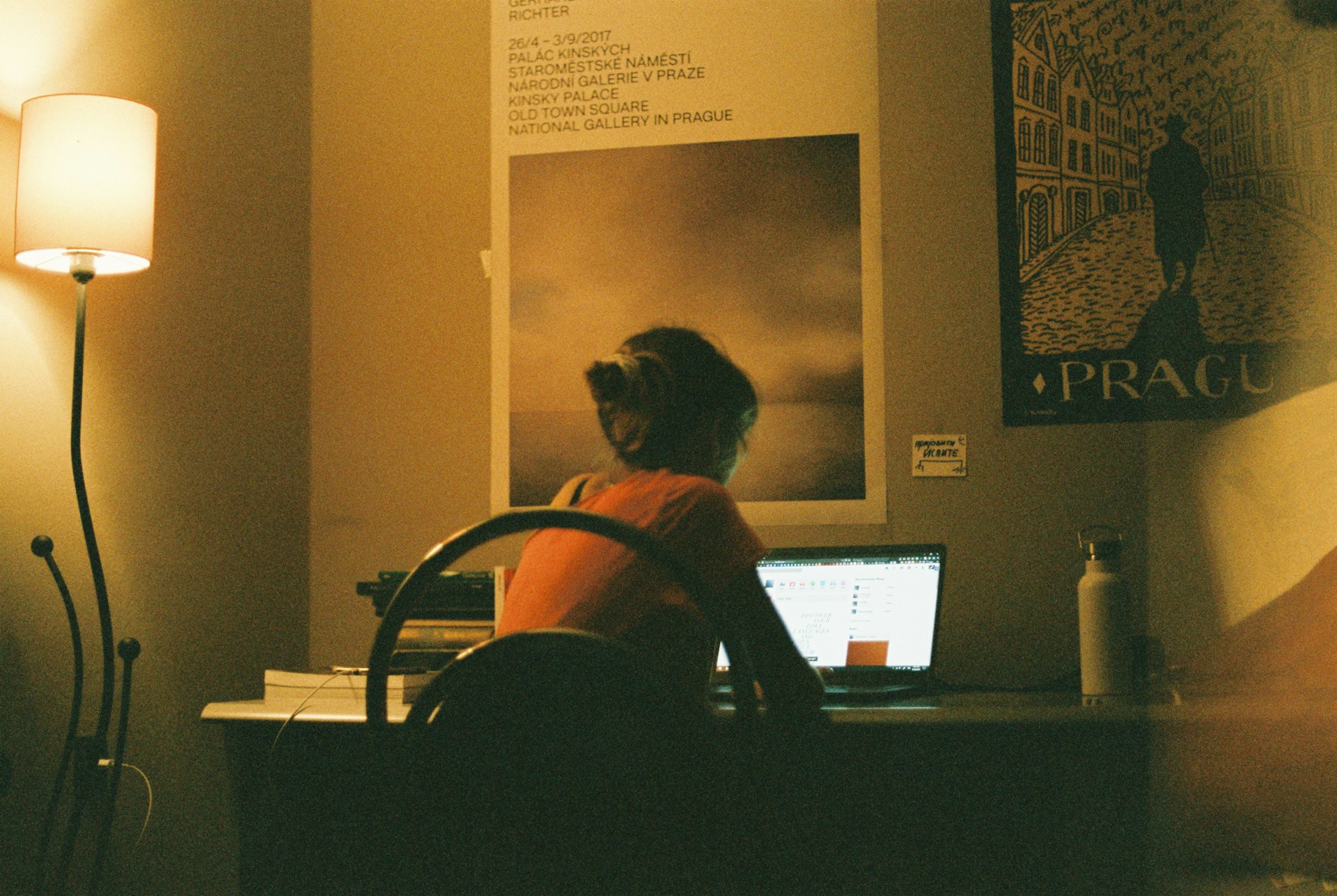
Funds can address any barriers to sustaining and advancing your artistic practice, offering time to explore, reflect, connect, or create work at a particularly important moment in your creative development.
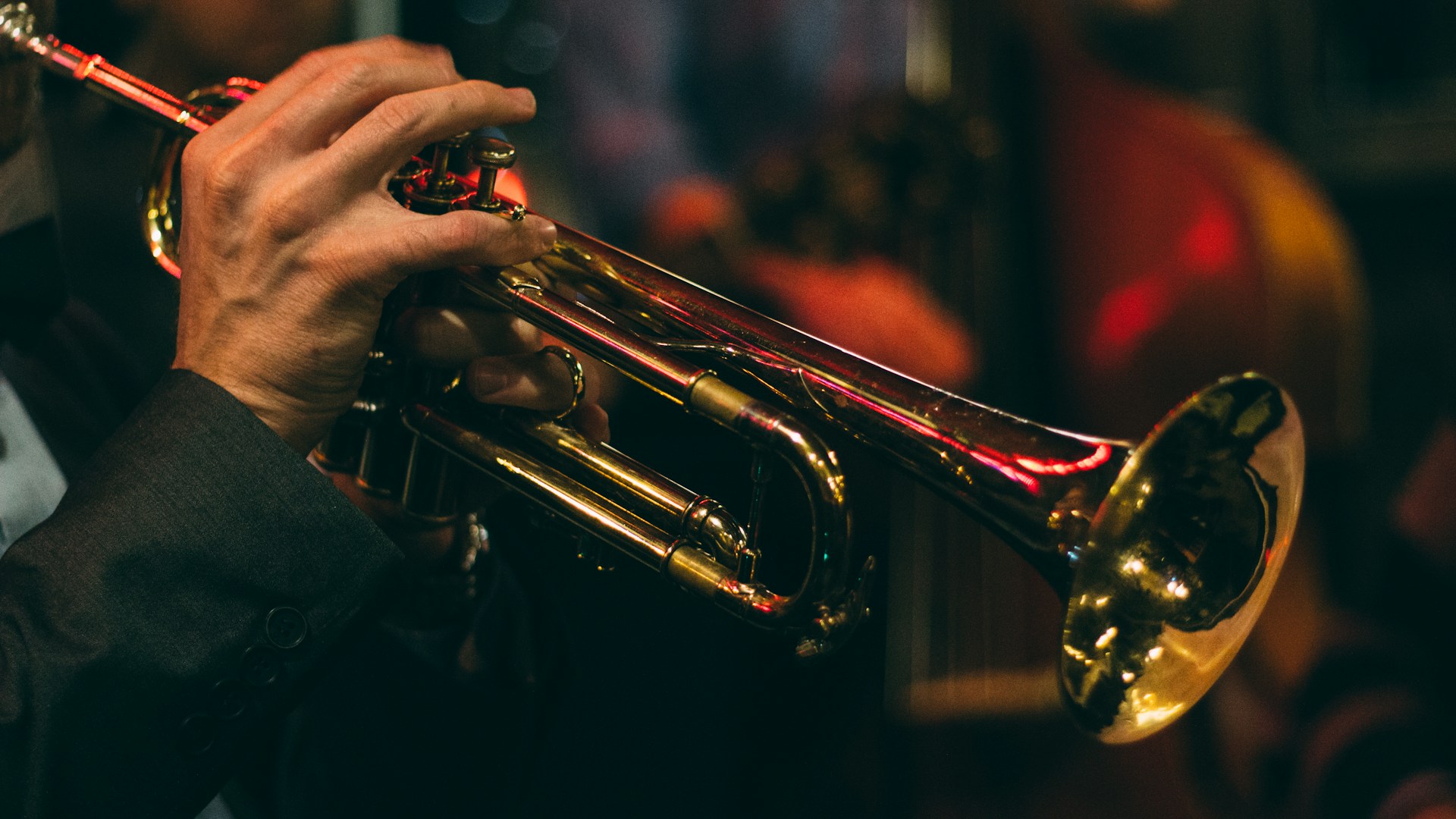
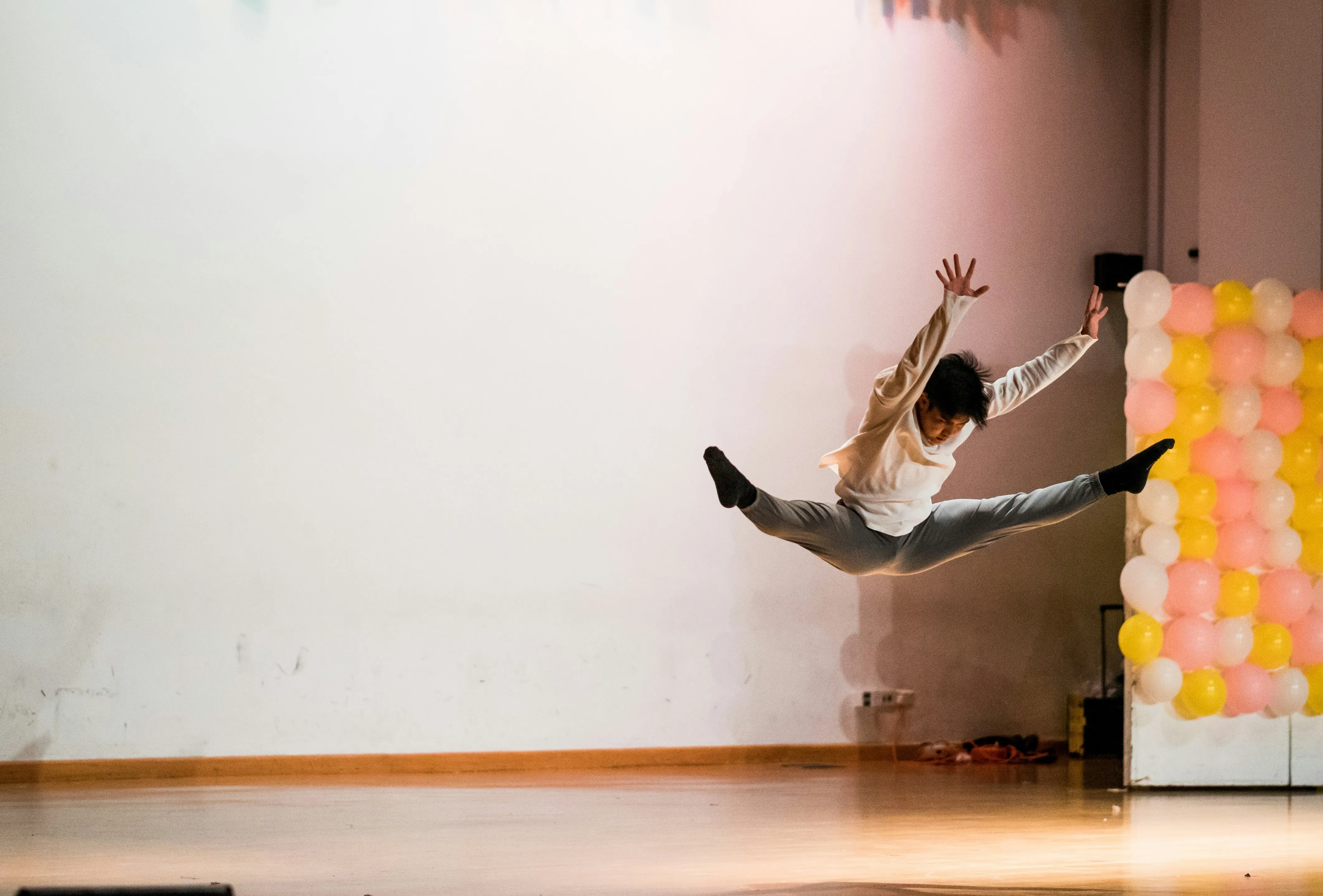
2024
Individual artists creating original work in the performing arts: dance, music, theater, and other performance practices, traditional and folk performance, Culture Bearers and interdisciplinary artists whose work includes the performing arts as one of the primary forms of expression.
2025
Individual artists creating original work in the fields of literary arts (fiction, creative nonfiction, poetry, graphic novels) and media arts (animation, experimental, narrative and documentary media), and interdisciplinary artists whose work includes the literary or media arts as the primary forms of expression.
2026
Individual artists and Culture Bearers creating original works of visual art in the following categories, and presenting in an exhibition/installation context: Book arts, Collage, Ceramics, Drawing, Ecological Art, Fiber, Glass, Installation, Painting, Photography, Printmaking, Sculpture, Social Practice, Sound Art, Video/Digital Art, and interdisciplinary practices where visual arts is an ongoing primary form of expression.
Eligibility requirements and full application preview can be found in the 2026 Guidelines [PDF].
Eligible applicants will be individual midcareer artists who meet these basic criteria:

Photo credit: Simon Takatomi

To be eligible for this grant program, applicants should be an individual visual artist or Culture Bearer who meet the following criteria:
The Miller Foundation does not discriminate on the basis of race, color, religion, gender, gender identity, sexual orientation, national origin, age, disability, marital status, veteran status, or any other status protected by applicable federal, state, or local law.

Artist’s creative practice demonstrates a distinctive vision and voice, and communicates unique perspective/s that contribute to the evolution of their discipline

Artist demonstrates strong technical skills and craft in the execution of their work, and an ongoing commitment to workingin this form

Applicant demonstrates efforts in growing an audience, and impactful public engagement with their artistic work that extends beyond their studio

Applicant demonstrates sustained growth in professional opportunities and provides compelling evidence that that they are in a catalytic period of their creative career, with likely significant future contributions to their field. They clearly articulate the impact funding can have in this crucial phase of their artistic practice
Following a screening for eligibility, applications will be reviewed by a panel of regional and national experts.
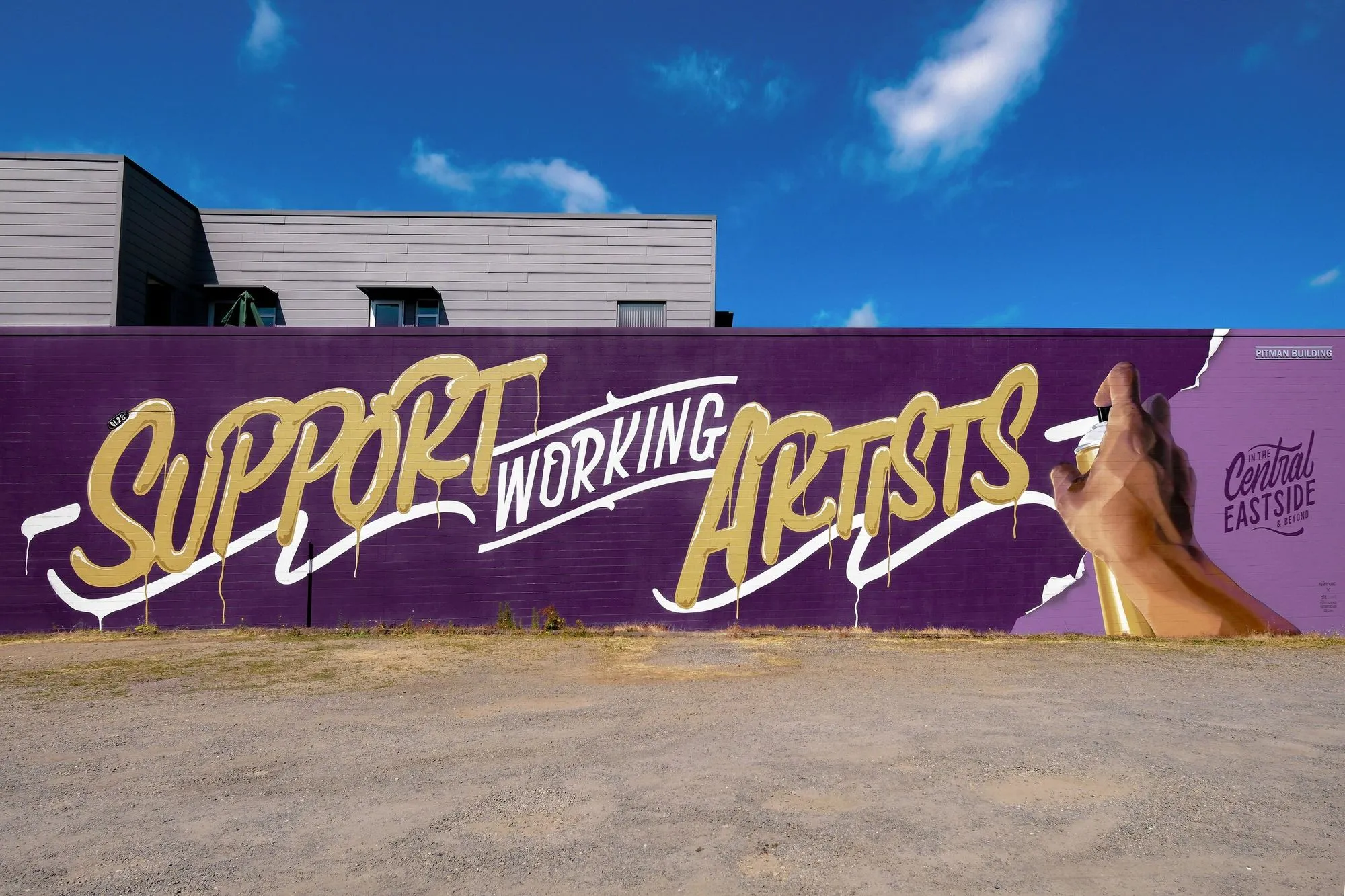
photo credit: Sara Sjol. Artists: ERAS and Never Satisfied| Portland Street Art Alliance
Tell us who you are and share your background, influences, and journey as an artist.
Tell us a bit about yourself, such as where you grew up, what led you to become an artist, or any other information that might not be included in other parts of your application.
[2,000 characters maximum including spaces]
Tell us about your original artistic practiceand how it has developed over time: you may include information about yourinfluences, process, values, emphasis, main interests, and more. Whatunderlying concepts or ideas connect your work over time? What are your currentinvestigations or curiosities?
[3,500 characters maximum, including spaces]
Tips and Resources on preparing your bio and artist statement available HERE.
Tell us about your engagement with audiences. Explain how this funding would provide momentum for your creative development in this particular period of your career and what comes next.
The Spark Award aims to support artists who directly engage audiences beyond their studio practice. Tell us about the specific audience/s and public you wish to reach and impact with your work: In what ways do you engage with these audiences? What interactions or experiences have you had with those who have engaged with your work?
[3,000 characters maximum, including spaces]
The Spark Award is intended to support artists at a pivotal juncture of their career. Tell us inwhat way is this a catalytic phase in your creative career? How would this funding provide momentum for your creative development in this particular period? What comes next?
While this funding does not need to be used in support of a specific project, the application should describe how the funding can serve as a catalyst to advance your creative development and artistic career.
[3,500 characters maximum, including spaces]
Reminder: This funding is intended to support you as an artist. As such, the funding may be used to support any activities that sustain your practice, including – but not limited to – living costs such as rent, healthcare, childcare, trainings, materials, equipment, research costs, etc.
Provide details of the presentation of your work to date and experience related to your current artistic practice.
* Career Spotlights: In this section we ask that you list what you regard as 5 achievements in your creative career to date. This might include particular exhibitions, completion of a major project, the inclusion of your work in a collection, a commission, a presentation, an honor or award you have received, a publication, a teaching position, or other professional opportunity.
We realize these same accomplishments are likely to appear on your resume/CV. Our intention is not to duplicate your efforts, but rather to provide the reviewers with a sense of what you regard as your greatest career accomplishments. For each one-line entry, include a brief description of the opportunity and when/where it took place (if relevant). These do not need to be listed in a particular order.
* Artist Resume/CV: Upload a resume/CV in a single document. This document is a tool that helps reviewers understand the evolution of your artistic career to date—it will be carefully reviewed to fully assess eligibility, career stage, commitment to your discipline, audience engagement, and future potential. As such, the document should provide a comprehensive overview of the presentation of your work. tracking the growth in scope and caliber of the opportunities you have had over time.
The CV should list your exhibition history (separate out group from solo), commissions, acquisitions, grants or awards, residencies, teaching or program opportunities, and/or other relevant activities. Clearly state the year and location in which the activity occurred. Do not include general employment history or other information unless it is relevant to your artistic practice.
[Five pages maximum in PDF format]
Tips and Resources on preparing a CV HERE.
Share samples created in the last decade that you consider the best examples of your creative practice.
Provide samples representing works created in the last 10 years that show a range of your visual arts practice, half of the samples must have been completed in the last 3 years (this can include works in progress): You may submit either 10 image files or 6 media files (video/audio) of up to 3 minutes each (~18 minutes total). To submit a combination of image and media, you may provide 5 images and 3 media files (~9 minutes total). Provide context in the designated ‘Work sample information’ field.
The work samples you submit are the most important part of your application. Upload image files or video/audio links for each work.
Follow the specifications in the guidelines when selecting samples for your application.
Tips and Resources on preparing your work samples for application available HERE.
The 2026 Spark guidelines are now available [PDF].
The application period opens on April 15.
Applications are due on June 3 by 5pm PDT.
Sign up for updates on the 2026 Spark Award.

Photo credit: Rapha Wilde


